The difference
Why most businesses fail at social media
You are posting. Nothing is happening. It is almost never the amount.
The short answer
Most business accounts fail because every post is about the business. Posting more does not fix it. Platforms now decide reach by subject, and a post that only says "come to our shop" has no subject to file it under, so it reaches the people who already follow you and stops there. The accounts that grow publish about the field, not about themselves.

One of two things
Billboard or magazine
What almost everyone runs
A billboard
Says one thing, to whoever happens to pass, forever.
What actually gets read
A magazine
Has a subject. People choose it, and they come back when they are not buying anything.
| Billboard | Magazine | |
| Subject | itself | the field |
|---|---|---|
| Audience | whoever passes | people who chose it |
| Reason to come back | none | the next one |
| What it asks for | come in | nothing |
| Who it reaches | people who already follow you | anyone interested in the subject |
78%
of major brands could vanish tomorrow and people say they would not care, or could easily replace them. Up five points in a year.
Havas, Meaningful Brands 2025 Global Report. Annual study running since 2008.
57.5%
name posting too many promotions the single most annoying thing a brand does. 41% will unfollow a business that shares nothing relevant.
Sprout Social, Q3 2016 Index. 1,022 users surveyed by Survata, 5 to 11 July 2016.
90%
of marketers who call their content successful put the audience's information needs ahead of their sales message. Among the unsuccessful, 56%.
Content Marketing Institute and MarketingProfs, B2B Content Marketing 2019. 771 marketers.
You are a billboard. You need to be a magazine.
The uncomfortable version
Think about the person who only ever talks about themselves at lunch.
They are not a bad person. They are not doing anything wrong exactly. They are just exhausting, and after a while you stop suggesting lunch.
Now think about the ones you do call. They ask how you have been. They ask about the thing you mentioned last time. They are interested in things that have nothing to do with them, and being around that is the whole reason you enjoy their company.
Your account is at that lunch. Every day. Saying the same thing about itself.
The fix is not to say it louder or more often. It is to become the kind of account someone would choose to hear from.
The mechanism
Why posting every day stopped being enough
This is not a matter of taste. It is a change in how the machines decide who sees anything, and the companies that run them have said so out loud.

Every public Reels and Feed post on Instagram is automatically processed through an LLM and analyzed across dimensions from topics to tone.
Those signals, she went on, "can then be passed to downstream applications across ranking, recommendations, and content policy enforcement."
Susan Li, chief financial officer, Meta. Q2 2026 earnings call, 29 July 2026.
Read that again slowly, because it is the whole argument. Instagram reads every post to work out what it is about. What it is about is what decides who sees it. A post that is only about your shop is a post with nothing to file, and nothing to file means nobody to send it to.
2014
Facebook published, in its own newsroom, that it was reducing the reach of overly promotional page posts. It named the offending behaviours: posts that push people to buy, posts that push people to enter promotions, and posts that reuse advertising copy.
Facebook Newsroom, Reducing Overly Promotional Page Posts in News Feed, 14 November 20142020
TikTok published how the For You feed picks videos, and said plainly that "neither follower count nor whether the account has had previous high-performing videos" are direct factors in the ranking.
TikTok Newsroom, How TikTok recommends videos, 18 June 20202021
YouTube's VP of engineering said recommendations drive "a significant amount of the overall viewership on YouTube, even more than channel subscriptions or search."
Cristos Goodrow, On YouTube's recommendation system, 15 September 20212022
Mark Zuckerberg told investors that about 15% of what people saw in the Facebook feed came from accounts they did not follow.
Meta Platforms, Q2 2022 earnings call2024
Two years later the same figure was about 30%, and for the first time more than half of what people saw on Instagram was recommended rather than followed. In the same year Instagram explained that recommended posts are auditioned: a post goes first to a small audience predicted to like it, and spreads only as that audience responds.
Meta Platforms, Q1 2024 earnings call, 24 April 2024. Instagram, Helping Creators Find New Audiences, 30 April 2024. Meta has not restated either figure since.2025
The head of Instagram said the three signals that matter most are watch time, likes and sends, and that sends count for slightly more when Instagram is deciding whether to show a post to people who do not already follow you. A send is someone forwarding your post to a friend. Nobody forwards an advert for a shop to a friend.
Adam Mosseri, head of Instagram, January 2025, restated May 2026Not a new idea
This is older than the internet
1900
A French tyre company published a little red book listing petrol pumps, mechanics and inns, and gave away nearly 35,000 copies at the Paris World's Fair. There were fewer than 3,000 cars in the whole of France.
First edition of the Michelin Guide. Car figure from the CCFA historical registration series.
1895
John Deere began publishing a magazine for farmers. It is still going. The Summer 2026 issue is out, and there is still a print edition.
The Furrow, John Deere. Verified on deere.com, 26 August 2026.
We do not talk about ourselves in the editorial space of the magazine.
David Jones, publications manager, John Deere. The Drum, 24 May 2018.
A tractor company has run a magazine for a hundred and thirty years and keeps its own name out of the stories. That is not a marketing theory. It is the oldest working version of this idea, it was built for people who work with their hands, and it has outlived every clever campaign that came after it.
And not only for big companies
A plumber has 729,000 subscribers
The usual objection is that this works for tractor companies and not for a business with eight trucks. These are all real, and all of them are small.
729K
Roger Wakefield
A master plumber in Richardson, Texas. He was paying up to $4,000 a month for marketing that was not working. He started posting plumbing explainers three times a week and ended the first year with 361 subscribers. The next year, about 20,000. Now 729,000, across 2,240 videos and 156 million views.
Read from his channel, 26 August 2026
1M
South Main Auto
A three-bay repair shop on South Main Street in Avoca, New York, a village of about 800 people. The owner films the jobs that come through his own shop. The channel has passed a million subscribers and 482 million views.
Read from the channel, 26 August 2026. Village population, 2020 US Census.
$250K
River Pools and Spas
A 20-employee pool installer. In early 2009 orders fell from six a month to barely two and it overdrew its bank account three weeks running. It cut a roughly $250,000 a year radio, TV and pay-per-click budget to about a tenth of that, and spent the time answering customer questions instead.
Mark Cohen, The New York Times, Small Business, 27 February 2013
Five symptoms
So why is yours not working
It is almost never the amount. It is one of these, and usually all of them.
Everything is about you
Your work, your team, your offer, your hours. All true, all fine, none of it a reason for a stranger to stop. The research is unusually specific: posts carrying brand and product information get likes and comments, but no measurable lift in shares. Shares are the thing that reaches new people. Pletikosa Cvijikj and Michahelles, Social Network Analysis and Mining, 2013. 5,035 posts from the top 100 food and drink pages.
You are on one channel
Whatever you made this week was seen in one place, by one slice of one audience, once. No single platform reaches everyone: 84% of US adults use YouTube, 71% Facebook, 50% Instagram, 37% TikTok. Facebook peaks with 30 to 49 year olds. Instagram reaches 80% of under-30s and 19% of the over-65s. Pew Research Center, Americans' Social Media Use 2025. 5,022 US adults.
You publish one format
The same photo with a different caption. Every format you are not using is a shape of attention you are not collecting, and an audience that never sees you.
You post why they should come
Rather than what they are interested in. Those are different subjects, and only one of them is about the reader.
You are under the line
Three posts a month is not a small version of a strategy. It is closer to nothing than it is to a little.
Those five are exactly what the free grader scores: volume, video, channels, ratio and formats. This page tells you what is wrong in general. That tells you which one is wrong for you.

An imagined conversation
Between a business that posts, and one that publishes
"I post every single day."
So does a billboard.
"People like seeing the finished jobs."
They do. That is one post in four, not four in four.
"I am a plumber, not a journalist."
There is a master plumber in Texas with 729,000 subscribers. He is not a journalist either. He just answers the questions people actually ask him.
"Who wants to read about dog grooming?"
Anyone with a dog and a rug.
"I tried posting tips. Nothing happened."
How many, over how long, on how many channels, in how many formats? That is four questions, and most people get four noes.
"I do not have time to be a magazine."
Correct. That is the real problem, it is the only one on this list you cannot fix by trying harder, and it is the one we exist for.
The replies come from waggle.grooms, one of the invented businesses used across this site. It is a device for making an argument, not a customer, and it is not claiming a result.
The part where you are right
Two things this page owes you
The first
People do follow businesses for deals. That is the most common reason they give.
64% name deals as why they follow a brand, ahead of entertainment at 58% and product news at 57%. So "never post about yourself" would be bad advice, and this page is not giving it.
The largest study on this looked at 106,316 Facebook posts from 782 companies. Posts that only stated price, product and availability did worse when they ran alone, and better when those same details were paired with something with personality in it. The authors' recommendation was to combine the two, not to drop the promotion.
That is the ratio. Not abstinence, proportion.
Emplifi, The Social Pulse 2025, 965 US consumers. Lee, Hosanagar and Nair, Advertising Content and Consumer Engagement on Social Media, Management Science 64(11), 2018.
"I am local. I need people within five miles, not an audience."
This is the best objection and it deserves the real answer, which is that your subject was never the whole trade. It is the trade crossed with the place. A vet clinic's magazine is not veterinary medicine, it is being a dog owner in your town.
And that seat is empty. 212 US counties have no local news source at all. Another 1,525 have exactly one. Roughly 50 million Americans have limited or no access to local news. Meanwhile 73% of US adults say they get local news from friends, family and neighbours, which is the most common source there is.
Somebody is going to be the thing people in your town follow to find out what is happening in your trade. There is no competition for it, and in most towns nobody has taken it.
212
US counties with no local news source at all, and another 1,525 with only one.
Northwestern Medill, The State of Local News 2025.
73%
of US adults get local news from friends, family and neighbours, the single most common source.
Pew Research Center, September 2024. 5,146 US adults.
2026
TikTok launched a Local Feed in the US, where posts are shown to people based on location.
TikTok Newsroom, 11 February 2026. Opt-in, and a statement of intent rather than a measured outcome.
One more piece of honesty. If you have one referral partner who fills your book and you are turning work away, you do not need a magazine. You need a bigger van.
Concretely
What a magazine looks like for your trade
About you
~1
About the field
~3
A magazine is also not one thing repeated. These are real formats, shot for real trades. Every one you are not publishing is a shape of attention you are not collecting.
 The myth worth killing
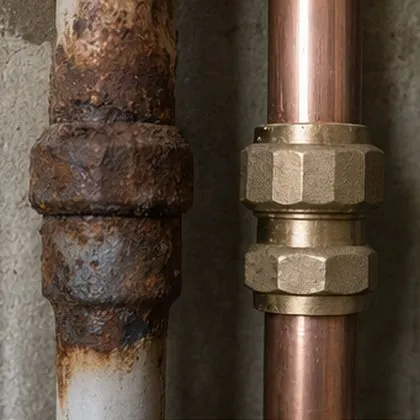 Before and after
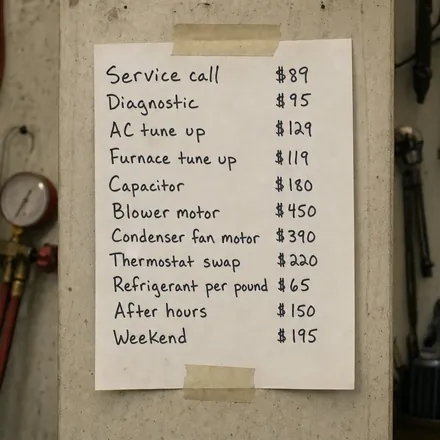 Price question
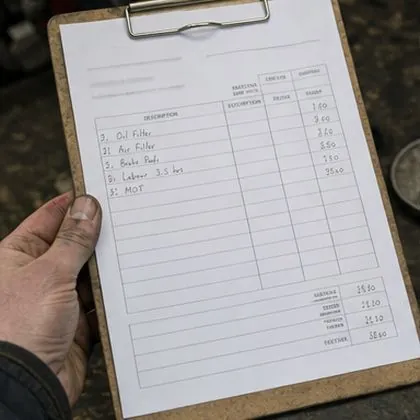 Cost breakdown
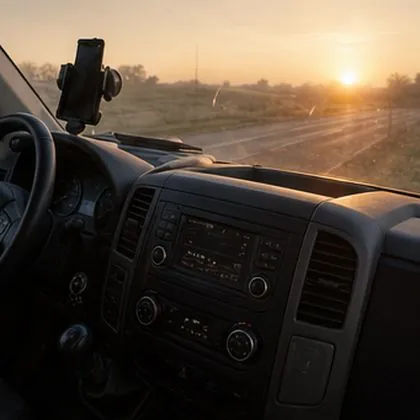 A day in the life
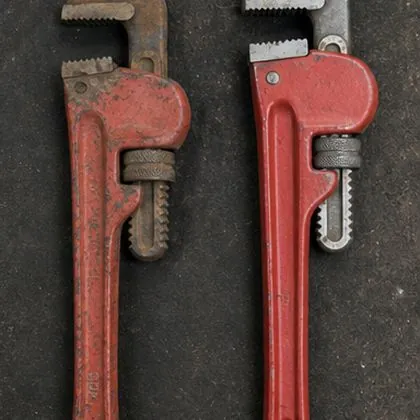 Two ways to do it
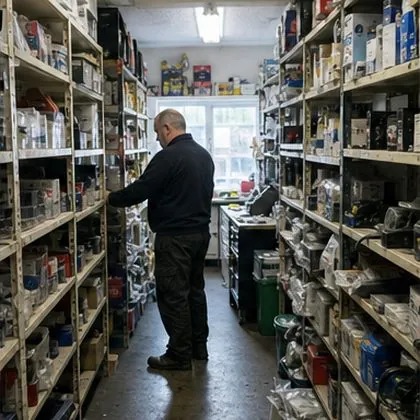 Behind the counter
 Local landmark
 How it is made
Start
Find out which one you are.
The grader takes about a minute and tells you the one thing to change first. If you would rather just talk, the call is fifteen minutes and we will tell you honestly if this is wrong for your business.

Every figure on this page carries its source, and each was checked twice: found against a primary source, then challenged by a second reviewer whose default answer was to reject it. Eighteen claims survived and seven were cut, including the opening statistic this page was first going to use.